
Specifications
Surface Treatments
Certifications
- ISO 9001 - 2015 Certified
- PED 2014/68/EC
- NACE MR0175/ISO 15156-2
- NORSOK M-650
- DFAR
- MERKBLATT AD 2000 W2/W7/W10
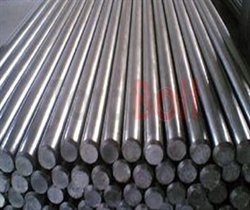
A286 cold-rolled bar (also called cold-finished bar, cold-drawn precision bar) is A286 bar stock that has undergone cold-rolling, cold-drawing, peeling, or centerless-grinding after hot-rolling, to achieve tighter OD tolerance (±0.025-0.05 mm vs ±0.10-1.5 mm hot-rolled), improved surface finish (Ra ≤ 1.5 µm vs Ra ~6-12 µm hot-rolled), and improved machinability through surface work-hardening. TorqBolt manufactures A286 cold-rolled bar in round, hex, and square cross-sections to AMS 5737 (the precision-aged spec), AMS 5732, ASTM A453 grade 660, and ASTM B637 standards in 5-50 mm sizes. The cold-finished surface is the standard input for precision-machined components, cold-headed fasteners, and aerospace SHCS / NAS bolt manufacture. See parent A286 bar stock, sister variants round bar, hex bar, square bar, and the canonical chemical composition, heat treatment.
A286 cold-rolled bar starts as hot-rolled bar (per AMS 5731) which is then cold-finished by one of three processes: cold drawing (bar drawn through a die at 0.5-1 m/min for ±0.05 mm tolerance), peeling (rotating cutting tool removes 0.5-2 mm surface layer for ±0.025 mm tolerance and Ra ≤ 0.8 µm finish), or centerless grinding (precision grinding wheel for ±0.012 mm tolerance and Ra ≤ 0.4 µm finish). Cold drawing is the most common, 70 % of cold-rolled bar volume, providing the standard precision input for fastener cold-heading and machined-component production. Peeling and centerless grinding are used for the highest-precision aerospace and instrumentation applications. Each cold-rolled bar lot is solution-treated and precipitation-aged per AMS 5737 to develop full A286 mechanical properties (130 ksi tensile / 95 ksi yield).
TorqBolt produces A286 cold-rolled bar via four cold-finishing methods:
| Size | Cold-drawn tol. | Peeled tol. | Ground tol. | Surface Ra (cold-drawn) | Available specs |
|---|---|---|---|---|---|
| 5-10 mm | ±0.025 mm | ±0.020 mm | ±0.010 mm | 1-2 µm | AMS 5737 / 5732 |
| 12-16 mm | ±0.05 mm | ±0.025 mm | ±0.012 mm | 1-3 µm | AMS 5737 / 5732 |
| 20-25 mm | ±0.05 mm | ±0.025 mm | ±0.012 mm | 1-3 µm | AMS 5737 / 5732 |
| 30-35 mm | ±0.07 mm | ±0.030 mm | ±0.015 mm | 2-4 µm | AMS 5737 / 5732 |
| 40-50 mm | ±0.10 mm | ±0.040 mm | ±0.018 mm | 2-4 µm | AMS 5737 / 5732 |
Every a286 cold-rolled bar TorqBolt ships traces back to a vacuum-induction-melted plus vacuum-arc-remelted (VIM-VAR) ingot meeting AMS 5731 / 5732 chemistry. The complete process route:
Each lot ships with a signed inspection certificate. Aerospace orders default to AS9100D first-article reporting per AS9102. Industrial orders default to EN 10204 type 3.1; sour-service and offshore step up to type 3.2 with third-party witness. Inspection scope:
Cold-rolled bar is raw stock, torque does not apply directly. Downstream operations: cold-heading force per cross-section ≈ 100,000 psi for A286 sol-treated material. Aging shrinkage 0.05 % linear; design machining allowance accordingly. Cold-finished surface work-hardens during drawing, improves machinability ~10-15 % vs hot-rolled bar. For precision shaft applications: aerospace centerless-ground bar (±0.012 mm) eliminates need for downstream finish-grinding, saving 1-2 days of machining time per shaft.
A286 cold-rolled bar is the standard input for precision-machined components and cold-headed fasteners:
Every A286 bar product is released against the applicable industry standard. EN 10204 type 3.1 mill certificates ship with every order. See the consolidated A286 AMS / ASTM specifications hub for full spec scope.
| Authority | Specification | Coverage |
|---|---|---|
| ASTM | A453 grade 660 Cl. A/B/C/D | High-temperature bolting material |
| ASTM | A638 grade 660 Type 1/2 | Forged bolting stock |
| ASTM | B637 | Precipitation-hardenable bar |
| AMS | 5731 | Bar / forging, solution-treated |
| AMS | 5732 | Bar / forging, solution-treated and aged |
| AMS | 5737 | Bar, sol-treated and aged (precision) |
| UNS | S66286 | Material designation |
| DIN | 1.4980 / X5NiCrTiMoVB25-15-2 | European designation |
| EN | 10204 3.1 / 3.2 | Mill / third-party-witness certification |
Engineers compare A286 bar against three alternatives: A286 vs Inconel 718, A286 vs 17-4 PH, and A286 vs Waspaloy. See A286 equivalent grades.
A complete a286 cold-rolled bar callout should include: material spec, heat-treatment condition, dimensional standard, size, surface finish, marking, inspection certificate. Example callout:
A286 cold-rolled bar, AMS 5737, ASTM A453 grade 660 Class A, sol-treated and aged, ⌀ 12.0 mm, length 3000 mm, cold-drawn finish, ±0.05 mm OD tolerance, surface Ra ≤ 1.5 µm, straightness ≤ 2 mm/m, EN 10204 3.1.
A286 bar that has been cold-finished after hot-rolling, by cold drawing, peeling, or centerless grinding, to achieve tighter OD tolerance (±0.012-0.05 mm), improved surface finish (Ra ≤ 0.4-3 µm), and surface work-hardening for improved machinability. The standard input for precision-machined components and cold-headed fasteners.
Hot-rolled: rolled at 1095-1150 °C, surface oxide pickled, OD tolerance ±0.10-1.5 mm. Cold-rolled (cold-finished): hot-rolled bar drawn / peeled / ground at room temperature for ±0.012-0.05 mm tolerance and Ra ≤ 0.4-3 µm finish. Cold-rolled is required for precision applications.
Cold-drawn: bar pulled through a die, ±0.05 mm tolerance, Ra 1-3 µm. Centerless-ground: peeled bar finished on a precision grinder, ±0.012 mm tolerance, Ra ≤ 0.4 µm. Centerless ground costs ~3-4× cold-drawn but eliminates downstream finish-grinding for precision applications.
Yes, the cold-drawing operation work-hardens the surface layer (typ. 0.1-0.3 mm depth) to Vickers HV ~30-50 above the bulk hardness. This improves machinability ~10-15 % vs hot-rolled, but the work-hardened layer is removed if surface aging or final-machining cuts deeper than 0.3 mm.
Cold-drawn: Ra 1-3 µm. Peeled: Ra ≤ 0.8 µm. Centerless-ground: Ra ≤ 0.4 µm (16 µin). Specify per drawing, finer finish costs progressively more (cold-drawn 1×, peeled 1.5×, ground 3-4×).
Standard production: 50 mm (2 inch) cold-drawn. 75 mm (3 inch) peeled. Centerless-ground: 75 mm. Above 75 mm, hot-rolled bar is the practical option, cold-finishing equipment limited at larger diameters.
No. Magnetic permeability < 1.005 verified per ASTM A342, preserved through cold drawing, peeling, grinding, sol-treatment, and aging. Critical for instrumentation, MRI, and aerospace electromagnetic-sensitive precision components.
Standard sizes 5-25 mm: 4-6 weeks from heat release. 25-50 mm: 6-8 weeks. Centerless-ground precision: add 2-3 weeks for grinding operation. Aerospace AS9102 first-article: add 1-2 weeks.
Yes, when supplied with hardness ≤ HRC 35 (HV ≤ 327) per NACE MR0175 / ISO 15156-3 for sour-service. Cold-finishing does not affect the bulk hardness; sour-service compliance is confirmed by Vickers traverse on the parent bar before cold finishing.
Three reasons aerospace and gas-turbine OEMs place a286 cold-rolled bar orders with us:
30+ years of fastener-manufacturing track record. Active certifications: ISO 9001:2015, AS9100D AQMS, PED 2014/68/EU and NORSOK M-650 QTR.
Active cold-rolled bar orders cover ⌀ 8-12 mm cold-drawn AMS 5737 for aerospace SHCS cold-heading lines, ⌀ 25 mm centerless-ground for engine accessory drive shafts, 13-19 mm hex cold-drawn for nut manufacture, and ⌀ 6-10 mm centerless-ground precision for MRI peripheral hardware.