
Specifications
Surface Treatments
Certifications
- ISO 9001 - 2015 Certified
- PED 2014/68/EC
- NACE MR0175/ISO 15156-2
- NORSOK M-650
- DFAR
- MERKBLATT AD 2000 W2/W7/W10
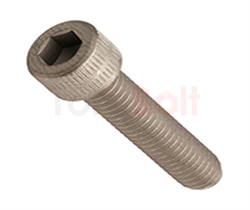
A286 gas turbine applications span industrial power-generation gas turbines (Siemens SGT-A65 / SGT-800, GE 9F-class, Mitsubishi M501F, Solar Mercury), aero-derivative gas turbines (LM2500 / LM6000), and small auxiliary gas turbines. A286 is the dominant precipitation-hardening superalloy material for combustor liner attachment, casing-split flange bolting, exhaust diffuser bolting, and transition-piece retention, operating temperature range 540-700 °C continuous. TorqBolt manufactures the full A286 gas-turbine fastener and component range to ASTM A453 grade 660, ASTM A638 grade 660, AMS 5731-5895, and customer-specific gas-turbine OEM standards (Siemens, GE, Mitsubishi, Solar). See parent A286 stainless steel, related sister applications jet engine, nuclear, aerospace, and product variants A286 bolts, hex bolts, metric bolts.
Industrial gas turbines run continuously at base load for 8000-32000 hours between major overhauls. Hot-section operating temperatures 700-1100 °C with 100-300 start-stop cycles per year. A286 is selected for retained preload through thermal cycling (gamma-prime precipitation stable to 700 °C), oxidation resistance in hot-gas environments to 982 °C, NACE MR0175 sour-service compliance (offshore gas turbines exposed to sour gas), and cost-efficiency at one-third Inconel 718 cost. For hot-section components above 700 °C (turbine blades, vanes), Inconel 718 / Waspaloy / Nimonic 80A are specified, see A286 vs Waspaloy.
Siemens (SGT-A65, SGT-800, SGT-A35), GE (9F-class, LM2500, LM6000), Mitsubishi (M501, M701), Solar (Mercury, Centaur, Mars), MAN (MGT-6000), and most other industrial and aero-derivative gas turbines. A286 is the dominant precipitation-hardening superalloy fastener material globally.
Combustor liner attach bolting, casing-split flange bolting, exhaust diffuser bolting, transition piece retention, IGV actuator bolting, generator coupling shaft bolting, stationary blade ring (vane) attach. Hot-section blades and vanes typically use Inconel 718 / Waspaloy / Nimonic 80A instead.
Carbon-steel bolts lose preload through thermal cycling, A286 retains 90 %+ of preload through 540-700 °C cycling. Carbon steel also corrodes in hot-gas environments; A286 oxidation-resistant to 982 °C. Cost premium of A286 (vs B7) is justified by overhaul-interval extension.
Yes, NACE MR0175 / ISO 15156-3 compliance with hardness ≤ HRC 35 verified. Common on Shell / BP / Aramco / Adnoc offshore gas-turbine power-generation modules.
Combustor liner + transition piece bolts: every C-inspection (~24,000-32,000 hours). Casing-split bolts: at major overhaul (typically 64,000-100,000 hours). A286 retains 90 % preload through these intervals, replacement is per OEM mandate, not material degradation.
Yes, A286 grade 660 with hardness ≤ HRC 35 per NACE MR0175 / ISO 15156-3 is sour-service compliant. Specify on PO; each heat receives Vickers traverse before release.
For service ≤ 700 °C, A286 (cost is one-third). For applications requiring tensile > 1240 MPa or extended fatigue life, Inconel 718. See A286 vs Inconel 718 for full comparison.
Siemens / GE / Mitsubishi proprietary specs: 8-12 weeks from heat release. Custom drawing parts add 2-3 weeks. EN 10204 3.2 third-party witness: add 1-2 weeks. Aerospace AS9102 first-article on aero-derivative applications: add 2-3 weeks.
No. Magnetic permeability < 1.005 verified per ASTM A342 on every aerospace and gas-turbine heat. Critical for non-magnetic isolation of speed sensors, vibration sensors, and electromagnetic-sensitive instrumentation in modern gas turbines.
Other A286 application reference pages: jet engine fasteners · gas turbine applications · nuclear applications · aerospace fasteners.
Canonical A286 reference: A286 chemical composition · A286 mechanical properties · A286 heat treatment · AMS / ASTM specifications hub · alloy comparisons (vs Inconel 718 · vs Waspaloy).