
Specifications
Surface Treatments
Certifications
- ISO 9001 - 2015 Certified
- PED 2014/68/EC
- NACE MR0175/ISO 15156-2
- NORSOK M-650
- DFAR
- MERKBLATT AD 2000 W2/W7/W10
A286 set screws (also called grub screws, socket set screws, headless setscrews) are headless threaded fasteners with a hex socket internal drive, used to lock a shaft in a hub, retain a pulley or sprocket on a shaft, or hold a precision component in axial position. TorqBolt manufactures A286 set screws in four point geometries: flat point (DIN 913 / ISO 4026), cone point (DIN 914 / ISO 4027), dog point (DIN 915 / ISO 4028), and cup point (DIN 916 / ISO 4029) per ASME B18.3 (US) and BS EN ISO 4026-4029 (UK / EU) standards. Sizes M3-M20 metric and #4 to 3/4 inch. Heat-treated to ASTM A453 grade 660 Class A from AMS 5731 bar, 130 ksi tensile, 95 ksi yield. See parent A286 screws, sister SHCS, cap screws, and the canonical chemical composition, heat treatment.
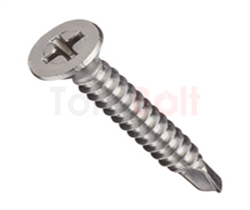
A286 set screws are headless threaded studs with hex socket drive. Set screws differ from cap screws and bolts in two ways: (1) no head, drive is the internal hex socket only, (2) point geometry on the threaded end is the working surface (flat / cone / cup / dog), not a head bearing surface. Used in radial-bore applications: shaft set screws, hub-on-shaft retention, collar set screws, machine-tool work-holding, optical-mount alignment, instrumentation pedestal locking. Each set screw is machined or cold-formed from A286 bar (AMS 5731), thread-rolled, point-formed (turning, grinding, or coining), then solution-treated 1650 °F + aged 1325 °F per AMS 5737. Final hardness 277-302 HBW.
Four primary point geometries, selection drives application:
| Metric size | Pitch | Hex socket | Length range | Min. holding torque (N·m) |
|---|---|---|---|---|
| M3 | 0.5 | 1.5 mm | 3-25 mm | 0.5 |
| M4 | 0.7 | 2 mm | 4-30 mm | 1.2 |
| M5 | 0.8 | 2.5 mm | 5-40 mm | 2.5 |
| M6 | 1.0 | 3 mm | 6-50 mm | 5.0 |
| M8 | 1.25 | 4 mm | 8-60 mm | 12 |
| M10 | 1.5 | 5 mm | 10-80 mm | 25 |
| M12 | 1.75 | 6 mm | 12-100 mm | 44 |
| M16 | 2.0 | 8 mm | 16-100 mm | 108 |
| M20 | 2.5 | 10 mm | 20-100 mm | 212 |
Every a286 set screws TorqBolt ships traces back to a vacuum-induction-melted plus vacuum-arc-remelted (VIM-VAR) ingot meeting AMS 5731 / 5732 chemistry. The complete process route:
Each lot ships with a signed inspection certificate. Aerospace orders default to AS9100D first-article reporting per AS9102. Industrial orders default to EN 10204 type 3.1. Variant-specific inspection scope:
Set screws torque to develop holding force on the mating component, typically 50-75 % of yield. Cup-point holding force is 60-70 % of axial load on a 1/4-20 cup point at 100 in-lb torque on a hardened shaft. Cone point: highest holding force but creates dimple in shaft, replacement may require new shaft. Always tighten in 2 stages: 50 % torque + 1/4 turn final to seat the point. For high-vibration applications use thread-locker (Loctite 242 / 263) on the threads. Above 540 °C use nickel anti-seize on threads, galling makes set screw loosen unpredictably.
Set screws lock components on shafts, pins, and pedestals, applications:
Every A286 fastener is released against the applicable industry standard. EN 10204 type 3.1 mill certificates ship with every order. See the consolidated A286 AMS / ASTM specifications hub.
| Authority | Specification | Coverage |
|---|---|---|
| ASTM | A453 grade 660 Cl. A/B/C/D | High-temperature bolting material |
| ASTM | A638 grade 660 Type 1/2 | Forged bolting stock |
| AMS | 5731 | Bar / forging, solution-treated |
| AMS | 5732 | Bar / forging, solution-treated and aged |
| AMS | 5737 | Bar, sol-treated and aged (precision) |
| UNS | S66286 | Material designation |
| DIN | 1.4980 / X5NiCrTiMoVB25-15-2 | European designation |
| EN | 10204 3.1 / 3.2 | Mill / third-party-witness certification |
Engineers compare A286 against three alternatives: A286 vs Inconel 718, A286 vs 17-4 PH, and A286 vs Waspaloy. A286 wins the 540-700 °C cost-per-MPa-of-retained-preload comparison cleanly. See A286 equivalent grades.
A complete a286 set screws callout should include all eight elements: material spec, heat-treatment condition, dimensional standard, size, thread tolerance class, surface finish, marking, inspection certificate. Example callout:
Set screw, ISO 4029 cup point, A286 / UNS S66286, ASTM A453 grade 660 Class A, ST+A, M6 × 1.0 × 12 mm, 6g thread, hex socket 3 mm, EN 10204 3.1.
Set screws lock a shaft inside a hub, pulley, sprocket, or collar, radial-bore application. Also used in optical mount alignment, machine-tool work-holding, robot joint encoder retention. Headless design with hex socket drive permits installation in a tapped through-hole or blind-hole.
Cup point: 70 % of market, best general grip on smooth shaft. Cone point: highest holding force but creates dimple, for permanent installation. Flat point: minimal shaft damage, for hardened shafts and frequent re-positioning. Dog point: positive rotational lock, engages mating hole in shaft for indexed position.
3 mm hex key (Allen wrench) per ISO 2936. Note: same hex key as M5 ISO 4762 SHCS but different from M6 SHCS (5 mm hex). Set screws use smaller hex socket than cap screws of the same thread size.
No. Magnetic permeability < 1.005 verified on every aerospace lot per ASTM A342. Critical for sensor-isolation on robotic encoders, optical instrumentation, and aerospace shafting.
Yes, Loctite 242 (medium-strength, removable) or 263 (high-strength, permanent) compatible with A286 austenitic surface. Apply 1-2 drops on threads only, finger-tighten, then torque. Above 540 °C thread-locker decomposes, use mechanical thread-form lock or staking instead.
Cup point: concave end with sharp peripheral edge, grips on shaft surface, removable. Cone point: 90° conical end, penetrates and creates dimple in shaft, permanent installation. Cone point requires shaft replacement on removal; cup point allows shaft re-use.
Yes. Cup-point holds 60-70 % of axial load on 1/4-20 set screw at 100 in-lb torque (hardened shaft). For positive rotational lock against high torque, use dog-point engaging a matching shaft dimple, or use a Woodruff key + set screw combination.
Standard production: M3 to M20 metric, #4 to 3/4 inch. Larger sizes available custom, M24 to M48, 7/8 inch to 1-1/2 inch, for industrial heavy machinery applications.
Yes, solution-treated 1650 °F + aged 1325 °F × 16 hours per AMS 5737 / ASTM A453 grade 660 Class A. Final hardness 277-302 HBW (29-32 HRC). Cup-point edge hardness verified ≥ 30 HRC for grip-critical applications.
Three reasons aerospace and gas-turbine OEMs place a286 set screws orders with us:
30+ years in fastener manufacture; ISO 9001:2015 + AS9100D + PED 2014/68/EU + NORSOK M-650 QTR all current.
Active set-screw applications: ISO 4029 cup-point M6/M8 on aerospace accessory shaft retention, DIN 916 cup-point M5 on robotic joint encoders, DIN 914 cone-point M10 on gas-turbine combustor alignment fixtures, and ASME B18.3 cup-point #6/#8 on optical-mount pedestals.